Roof Leak or Plumbing Leak? How to Tell Before You Call
Not sure if that ceiling stain is from your roof or your plumbing? Here’s how to tell the difference and decide which pro to call first.
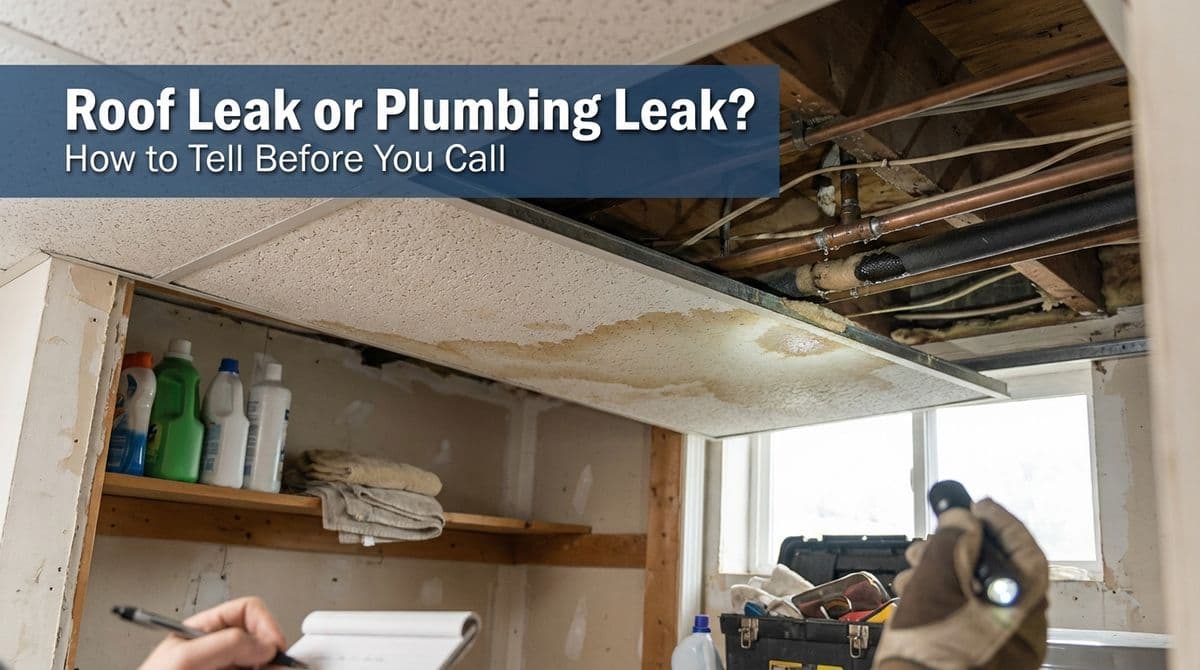
A Confusing Leak Inside the House
We recently got a call from a homeowner — let’s call him Jason — who was dealing with a mystery leak in his house. Water was showing up inside, but he couldn’t find any obvious dripping pipe, no running toilet, nothing under the sinks. He told us, “I don’t know if I have a roof leak, but I know we have a leak inside the house… I just can’t tell if it’s plumbing or the roof.”
Jason’s main question was simple and very common: “Can you come inspect and confirm if it’s the roof or not?” We let him know that for homes in our regular service area, there’s no charge for us to come out and take a look — the real challenge is that during busy seasons, it can take a week or two to get someone out.
While we were putting Jason in our queue, we walked him through a few things he could check himself in the meantime. Those same tips can help you figure out whether your leak is more likely a roofing issue or a plumbing problem, so you know which pro to call first.
First Step: Where Is the Water Showing Up?
The first clue is location. Jason’s leak was inside the living area, not under a sink or around a tub, and nothing obvious was wet above it. That already pointed us more toward the roof, but we asked him some specific questions you can ask yourself:
- Is the leak under a bathroom, kitchen, or laundry room? If yes, plumbing is a strong suspect.
- Is it in the middle of a ceiling under the attic or directly under the roof? That leans more toward a roof issue.
- Is it near a chimney, skylight, or vent? Those are classic roof leak points.
Walk around and look carefully at where the water is appearing: ceiling, wall, corner, or floor. Even snapping a few pictures can help you (and us) later.
Check the Timing: Does It Match the Weather?
Next, we asked Jason a key question: “When did you first notice it, and was it raining?”
In general, this rule of thumb helps:
- Leak gets worse during or right after rain: Likely a roof leak.
- Leak happens even when it’s dry outside: Could be plumbing or HVAC (like an AC drain line).
If the spot only shows up or grows when it rains, that’s a strong sign your roof or roof flashing is involved. On the other hand, if water shows up on a sunny day or in the middle of the night after no rain, a pipe, appliance, or condensate line is more likely.
What the Stain Looks and Smells Like
We also asked Jason to describe what he was seeing on the ceiling. The color and smell can tell you a lot:
- Roof leaks often cause yellowish, brown, or tan rings on the ceiling or walls. The stain may spread slowly over time and feel cool or damp, but not necessarily musty at first.
- Plumbing leaks can create sharper, more defined wet spots and may stay persistently damp. If it’s from a drain or sewer line, you might notice a musty or foul odor.
Also check for bubbling or peeling paint, especially on walls below bathrooms. That’s often a sign of a slow plumbing leak running down inside the wall.
Simple Checks You Can Do Before You Call
While we were scheduling Jason’s inspection, we suggested a few basic checks he could do safely while he waited. You can do the same:
1. Turn Things Off and Observe
- Turn off faucets, dishwashers, washing machines, and sprinklers.
- Flush toilets and make sure they stop running properly.
- Watch the leak area for an hour or two.
If the wet spot keeps growing even with no water running, and there’s no recent rain, that’s a big red flag for a hidden pipe leak. If it only seems to grow during rain events, that points back to the roof.
2. Look in the Attic (If You Can Safely)
If you’re comfortable and it’s safe to do so, gently peek into your attic with a flashlight:
- Check the underside of the roof sheathing for dark stains, mold, or obvious wet spots.
- Look around vents, chimneys, and skylights. These are common roof leak sources.
- Follow any wet insulation or stained wood back toward the origin if you can.
If everything above the wet ceiling area looks dry and you don’t see any signs of water coming from the roof, the problem might be a pipe or an AC drain line running through the attic instead.
When to Call a Roofer First vs. a Plumber First
Here’s the guidance we gave Jason, and it applies to most homeowners:
Call a Roofer First If:
- The leak appears or gets worse only when it rains.
- The stain is on the top floor ceiling, under the attic or directly under the roof.
- The wet spot is near a chimney, skylight, or roof vent.
- You can see roof shingles missing, damaged, or lifted from the ground.
Call a Plumber First If:
- The leak is under or near a bathroom, kitchen, or laundry.
- The leak happens even when it hasn’t rained.
- You notice a musty or sewer-type smell.
- Your water bill has suddenly gone up with no explanation.
Why It Still Pays to Have a Pro Confirm
Even with all these clues, leaks can be tricky. Water doesn’t always show up right where it’s entering. In Jason’s case, we put him in our schedule queue and explained, just like we do with everyone, that during busy periods it might be a week or two before we can get out to inspect — but it’s still worth getting on the list early.
When we come out, we’ll trace the stain, inspect the roof surfaces above, check flashing and penetrations, and look in the attic if needed to confirm whether it’s a roofing issue. If we strongly suspect it’s plumbing-based instead, we’ll tell you that honestly so you can get the right specialist involved and not waste time or money.
If you’re staring at a mysterious spot on your ceiling and wondering whether to call a roofer or a plumber, use these steps to narrow it down — and if you’re in our service area, we’re always happy to come out, take a look, and help you get to the bottom of it.