Roof Maintenance for Aging Roofs in Escrow and After
In escrow on a home with an aging roof? Learn what to do during escrow and after closing to maintain it, manage risk, and avoid costly surprises.
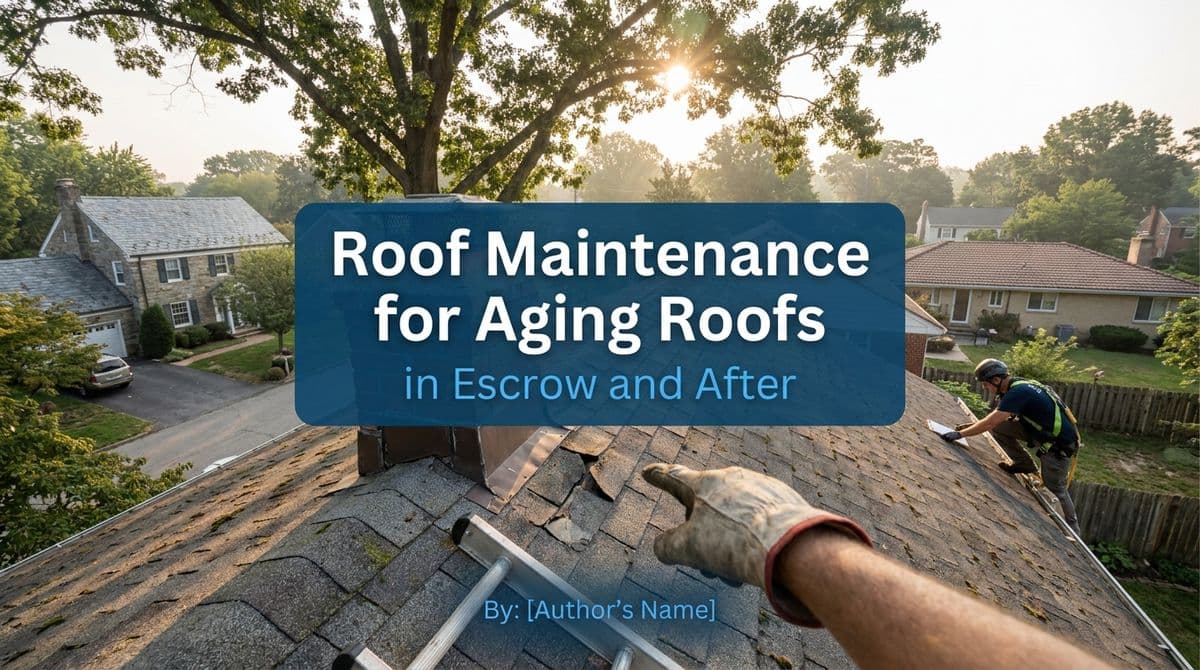
Roof Maintenance for Aging Roofs in Escrow and Beyond
We recently got a call from a realtor — let’s call him Jason — who was helping a buyer in escrow on a home with a roof that was “near the end of its life.” The inspection report said the roof had about a 30–35 year lifespan, and it was just about there. Jason told us, “We’re not going to replace it right now. We just want to see what it would cost to maintain it and keep it going.”
That’s a situation we see all the time. Buyers fall in love with a home, the roof is aging but not actively leaking, and everyone wants to know: What should we do during escrow, and what can wait until after closing?
During Escrow: Use the Roof Inspection the Right Way
In Jason’s case, the inspection report was already done, and he offered to email it to us. That’s exactly what we like to see. A good roof inspection report is a roadmap for smart maintenance decisions.
Here’s how we typically advise buyers and their agents to use that report during escrow:
- Flag immediate concerns. Active leaks, missing shingles/tiles, soft spots, and failed flashings should be addressed right away or negotiated in escrow.
- Separate cosmetic from functional issues. As we explained to Jason, some things on a report are just aesthetic. We review the report to see what truly affects weatherproofing versus what just “looks old.”
- Get a written maintenance estimate. During escrow, we’ll provide a line-item estimate for recommended maintenance so you can decide what to negotiate with the seller.
If you’re in escrow, your goal isn’t necessarily to make the roof brand new. Your goal is to be clear on risk, remaining life, and realistic maintenance costs so you don’t get surprised six months after you move in.
What We Look At on an Aging Roof
When a roof is at or near the end of its expected lifespan, we focus on the areas most likely to fail first. For a typical composition shingle or tile roof, that usually includes:
- Flashings around chimneys, skylights, and vents (common leak points)
- Valleys where roof planes meet and water concentrates
- Ridge caps and hips that are exposed to the most sun and wind
- Penetrations like pipes and vents where sealants dry out and crack
- Gutters and downspouts that may be clogged and forcing water under the roof edges
On an older roof, “maintenance” often means targeted repairs and tune-ups, not a full facelift. Think of it as getting your car serviced regularly so you don’t have to replace the engine tomorrow.
What Buyers Can Ask for in Escrow
Once you have the inspection and a roofer’s estimate, you and your agent can decide how to handle things in escrow. Some options we see buyers choose:
- Seller-paid repairs for any active or imminent leaks, based on a roofer’s written scope.
- Credits at closing so you can hire your own roofer after you take possession.
- No repairs, just information if the roof is older but serviceable and you’re comfortable with the risk.
Jason’s clients, for example, mainly wanted a realistic number for post-closing maintenance. That way, they could budget for it without derailing the deal.
After Closing: A Simple Maintenance Plan
Once you own the home, we usually recommend a straightforward plan for an aging roof:
- Schedule a full roof tune-up. We address any minor issues, reseal penetrations, replace broken or missing tiles/shingles, and clear debris.
- Clean the gutters and valleys. This reduces standing water and extends the life of the roof edges.
- Plan annual or biennial checkups. On an older roof, small issues can turn into leaks quickly, so a regular look-over is worth it.
This kind of maintenance doesn’t magically make a 30-year roof last 50 years, but it can help you get those final years out of it without emergency tarps and buckets in the living room.
Maintenance vs. Replacement: How We Help You Decide
One question buyers often have is, “Are we just throwing money at a roof that’s done?” When we walk a roof, we’re honest about where it stands on the curve between “worth maintaining” and “time to replace.”
As a rough guideline, we lean toward replacement when:
- There are widespread granule loss, curling, or cracking shingles/tiles.
- Leaks are coming from multiple unrelated areas.
- Maintenance costs in the next few years are likely to approach a significant percentage of a new roof.
On the other hand, if the roof is old but generally intact with isolated trouble spots, targeted maintenance can be a good investment to buy you time to save for a full replacement down the road.
Questions to Ask Your Roofer About an Aging Roof
Whether you’re still in escrow or already closed, it helps to ask a few pointed questions so you know exactly what you’re dealing with:
- “What are the top 3 risks on this roof right now?” This forces a clear, prioritized answer.
- “If this were your house, would you maintain or replace?” We answer this honestly, even if it means less immediate work for us.
- “What maintenance should I budget for in the next 3–5 years?” This helps you plan, not just react.
- “Which items on the inspection report are cosmetic vs. critical?” Not everything that sounds scary on paper is a real threat.
Getting clear answers to those questions can turn an aging roof from a mystery into a manageable line item in your home budget.
Need Help Interpreting a Roof Report?
If you’re like Jason’s clients and you’re under contract on a home with an older roof, you don’t have to guess. We’re happy to review your roof inspection report, separate the cosmetic from the critical, and provide a written estimate for maintenance work you can do after closing.
Whether you end up negotiating repairs in escrow or planning a post-closing tune-up, the goal is the same: a dry, safe home and no surprises from that aging roof.