Roof Overlay vs. Full Roof Replacement: Pros & Cons
Wondering if you can just add a second layer of shingles? Learn when a roof overlay makes sense, when it doesn’t, and how it compares to a full replacement.
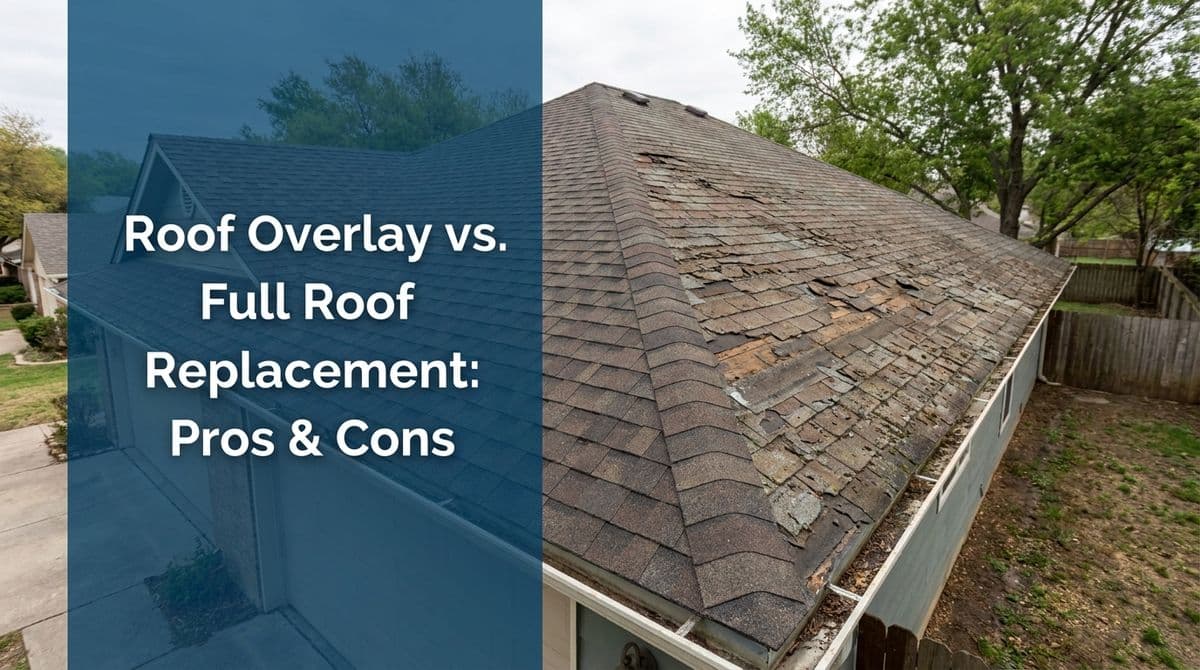
“Can You Just Add a Layer?” The Call That Sparked This Post
We recently got a call from a homeowner — let’s call him Mark — who lives in a pretty typical single-family home. Mark wanted an estimate on his roof and had a very specific question:
“Do you guys overlay any roofing on an older roof?”
That’s something we hear a lot. Mark wasn’t even sure yet if he needed a repair, an overlay, or a full tear-off and replacement. He just knew the roof was aging and he wanted options — and to understand the price difference between them.
If you’ve wondered the same thing, you’re not alone. Let’s walk through how we think about roof overlays vs. full roof replacements, and when a second layer of shingles actually makes sense.
What Is a Roof Overlay, Really?
When Mark asked about “overlay,” he was talking about adding a second layer of shingles over his existing roof instead of tearing the old one off.
In plain terms:
Overlay = New shingles installed directly over the old shingles (roof tear-off skipped).
Full replacement = All old shingles (and usually underlayment) removed down to the wood deck, then a brand-new roofing system installed.
On the phone, we explained one of the basic rules: we can only overlay if there’s currently just one layer on the roof. If there are already two layers, we won’t (and code generally won’t allow) a third. Too much weight, too many problems.
Why Overlays Appeal to Homeowners
Mark’s next question was the same one most people ask: “So how much cheaper is an overlay?”
Overlays are attractive for a few reasons:
Lower upfront cost – You save on labor and disposal because we’re not tearing off the old shingles.
Quicker project – With no tear-off, we can usually get the job done faster and with less mess.
Less disruption – Fewer dumpsters, less debris, and sometimes less noise.
For homeowners on a tight budget, or for a property they may not keep long-term, that can be tempting. But there are trade-offs you need to understand before choosing that route.
When a Second Layer of Shingles Can Make Sense
In Mark’s case, he told us he didn’t have an active leak — he just knew the roof was older and wanted to know his options. That’s the kind of situation where an overlay might make sense, if certain conditions are met.
We generally consider an overlay only when:
There is only one existing layer and it’s lying relatively flat (no major curling, buckling, or blistering).
No history of leaks in the areas being covered, and no signs of water damage in the attic.
The roof deck is solid (no soft spots, sagging, or rotten sheathing).
Local building codes allow a second layer.
The roof structure can handle the extra weight of another layer of shingles.
If we inspect a roof and all of the above check out, an overlay can be a reasonable, cost-conscious way to get more life and better curb appeal out of a house — especially if you’re planning to sell in the not-too-distant future.
When a Full Roof Replacement Is the Better Choice
Mark also wanted to know, “Is an overlay what you guys would suggest?” And that’s where we usually slow down and talk about the long-term picture.
We strongly recommend a full tear-off and replacement when:
There are existing leaks or water stains inside the home.
Shingles are badly worn – heavy granule loss, curling, cracking, or lots of missing tabs.
The roof looks lumpy – sagging areas or obvious unevenness.
The decking is questionable – soft spots you can feel when walking the roof, or visible damage from inside the attic.
You want maximum lifespan from the new roof.
An overlay only addresses what you can see from the outside. With a full replacement, we strip everything down so we can:
Inspect and replace any rotten or damaged wood.
Install new underlayment, flashing, and proper ventilation.
Fix problem areas around chimneys, vents, and valleys.
That’s why a full replacement almost always gives you better performance and longevity, even though the initial price is higher.
Hidden Downsides of a Roof Overlay
During calls like Mark’s, we’re always honest about the drawbacks of overlaying, so you’re not surprised later. Some of the big ones:
Shorter lifespan – The second layer usually doesn’t last as long as a brand-new single-layer system.
Heat buildup – Two layers can trap more heat, which is harder on the shingles and your attic.
Concealed problems – Any minor issues in the old roof get buried, where they can quietly get worse.
Future tear-off is costlier – When the second layer wears out, removing two layers is more labor and more disposal cost.
For some homeowners, those trade-offs are acceptable. For others, once they understand the whole picture, they decide a full replacement is worth the extra investment.
How We Help You Decide: The On-Site Inspection
After we took Mark’s information, the next step was to schedule an on-site visit. That’s always where the real answer comes from — not from a quick phone quote.
During a typical inspection, here’s what we’ll do:
Walk the roof to check shingle condition and flatness.
Look for soft spots or structural concerns.
Inspect flashing around chimneys, skylights, and vents.
Check gutters and edges for signs of water issues.
Only after that can we honestly tell you whether a second layer is feasible, whether we’d recommend it, and what the price difference will be between overlay and full replacement.
Not Sure Which Option Fits Your Roof?
If you’re like Mark — just starting to see signs of age on your roof and wanting to explore your options — the best next move is a professional inspection and written estimate.
We’ll walk you through:
Whether an overlay is even allowed and appropriate for your roof.
The pros and cons of each option for your home and budget.
Clear, line-item pricing so you can compare overlay vs. full replacement.
That way, you’re not just picking the cheapest number on paper — you’re choosing the solution that makes the most sense for your house, your plans, and your peace of mind.