Signs Your Concrete Tile Roof Underlayment Is Failing
Seeing stains or sagging drywall in your garage with a concrete tile roof? It may be your underlayment failing. Learn why it starts in the garage and what to do next.
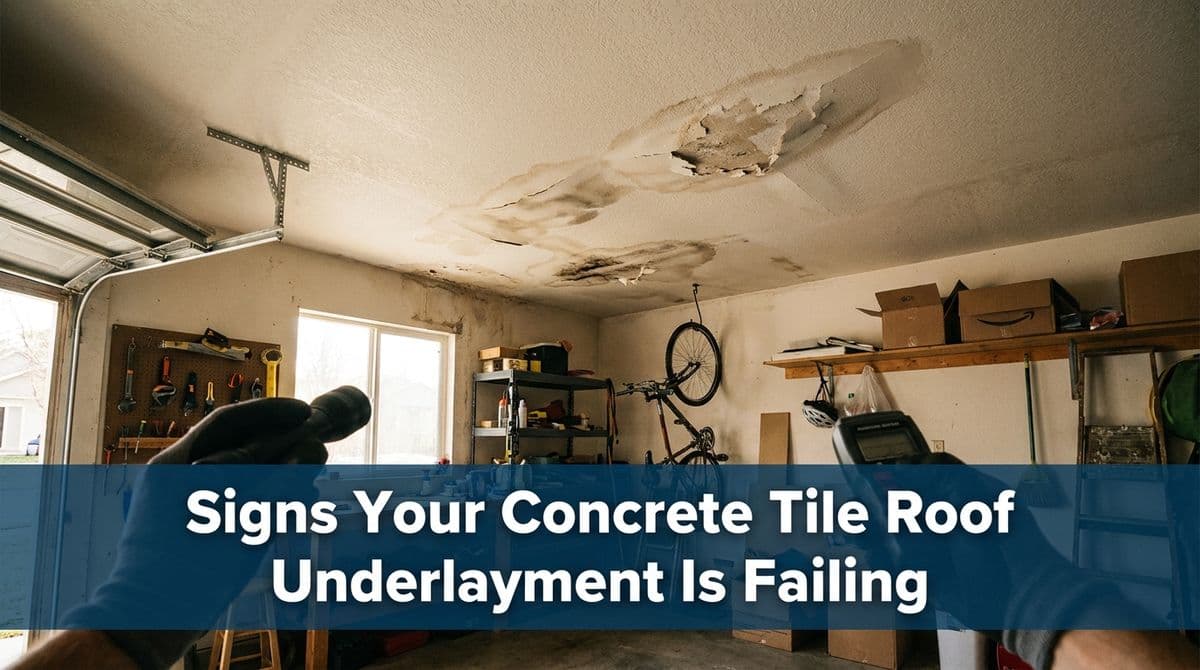
When a “Little Garage Leak” Points to a Bigger Roof Problem
We recently got a call from a homeowner — let’s call him Mark — who lives in a 25-year-old home with a concrete tile roof. Mark told us, “I’m pretty sure the tar paper has gone south,” and he wanted us to come take a look.
He doesn’t use his smaller garage very often, but a contractor working on something else happened to walk in there with him. They both stopped and said, “Whoa, look at that.” The drywall on the ceiling was starting to sag, there were visible moisture streaks down the wall, and the pretty finished surface wasn’t looking so pretty anymore.
What Mark was seeing is something we run into all the time with older concrete tile roofs: the underlayment (often called “felt” or “tar paper”) starting to fail — and the earliest signs often show up over the garage.
Why Underlayment Matters on a Concrete Tile Roof
Concrete or clay tiles are great at shedding sun and heat, and they look fantastic, but they’re not your primary waterproofing. The real waterproof barrier on a tile roof is the underlayment beneath the tiles.
On many homes built 20–30 years ago, that underlayment was a 30-pound felt paper. Over time it can:
- Dry out and become brittle from heat and UV exposure
- Crack or tear under normal expansion and contraction
- Break down around penetrations like vents and pipes
- Slip or wrinkle if water has gotten underneath tiles repeatedly
Once that underlayment is compromised, even a small amount of water that gets past the tiles during a storm can find its way into your attic — or, as in Mark’s case, into the garage ceiling.
Common Signs Your Tile Roof Underlayment Is Failing
Here are the red flags we look for when a homeowner calls with a suspected underlayment issue:
- Brown or yellow stains on ceilings or walls – especially in the garage or along exterior walls.
- Drywall sagging or bubbling – like Mark noticed in his small garage; moisture softens the gypsum and it starts to droop.
- Peeling paint or efflorescence – chalky white deposits where water has been evaporating out of the wall or ceiling.
- Musty or damp smell – particularly after a rainstorm, even if you don’t see an active drip.
- Water trails in the attic – darkened sheathing, rusted nail heads, or obvious drip marks when you look up.
Sometimes these signs only show up after a big storm. Other times, like in Mark’s situation, the problem has been quietly developing for a while in an area he doesn’t walk into every day.
Why the Garage Is Often the First Place You Notice
We get a lot of calls that start with, “It’s just over the garage.” There are a few reasons the garage tends to “tell on” your roof underlayment first:
- Less insulation and airflow control – Garages often have simpler framing and insulation, so moisture has a more direct path to the drywall.
- Big, open spans – A wide garage ceiling with long joists will show sagging sooner than smaller rooms with more interior walls.
- Less frequent use – Like Mark, many homeowners don’t walk into the secondary or storage garage very often, so by the time they notice, the damage is obvious.
- Roof layout – On L-shaped or complex homes, garage roofs can be low points or transition areas where water naturally concentrates.
So if you see staining or sagging in the garage, it doesn’t always mean the leak is only there. It often means that’s just where the damage is visible first.
What We Check When We Come Out
When we schedule an inspection for a home like Mark’s, especially with a 20+ year-old concrete tile roof, we follow a pretty specific process:
- Interior check – We look at the garage ceiling and walls, note the extent of staining, sagging, and any active drips.
- Attic inspection (if accessible) – We look for wet insulation, darkened roof sheathing, mold growth, or daylight showing where it shouldn’t.
- Roof surface inspection – We carefully walk the roof, lift tiles in the suspect area, and check the underlayment for brittleness, tears, and nail penetrations.
- Overall roof health – We don’t just look at the one spot. If the felt is failing in one area on a 25-year-old roof, we want to know how the rest of it is doing.
From there, we can tell you whether you’re looking at a small localized repair or if it’s time to start planning for a broader underlayment replacement.
Repair vs. Re-Roof: What Homeowners Should Expect
With concrete tile roofs, there are two main paths once we confirm underlayment issues:
- Localized repair – We remove tiles in the affected area, replace damaged underlayment and any bad wood, then relay the existing tiles. This can work when the rest of the roof is still in decent shape and the problem is truly limited.
- Full underlayment replacement (“lift and relay”) – On older roofs where the felt is failing in multiple spots, we lift all the tiles, install a modern high-performance underlayment, replace any damaged wood, and then reset the tiles. You keep the look of your existing concrete tile while getting a brand-new waterproof layer.
Which option makes sense depends on the age of your roof, your budget, and how widespread the underlayment damage is. With a 25-year-old roof like Mark’s, we’re always honest about whether a small repair will truly buy you meaningful time, or if it’s putting a Band-Aid on a bigger issue.
What You Can Do If You See These Signs
If you’re seeing anything like what Mark noticed in his small garage, here are a few steps to take:
- Document the damage – Take clear photos of stains, sagging drywall, and any active drips.
- Avoid poking or cutting drywall – It’s tempting to “let it drain,” but that can spread the mess and make repairs trickier.
- Check after the next rain – Note whether the area gets worse, stays the same, or actively drips during storms.
- Schedule a professional roof inspection – Especially if your concrete tile roof is 20+ years old, it’s worth having us take a thorough look.
A little discoloration in the garage ceiling doesn’t automatically mean you need a full re-roof — but it is your roof’s way of asking for some attention. If you catch underlayment problems early, you can often prevent bigger, more expensive interior damage down the line.
If you’re not sure what you’re looking at, we’re always happy to come out, take a look, and give you an honest assessment of what’s going on over your head.