Slipped Roof Tiles: A Red Flag You Shouldn’t Ignore
Slipped roof tiles aren’t just cosmetic. Learn why they’re a red flag and how timely tile roof inspections can prevent leaks and expensive damage.
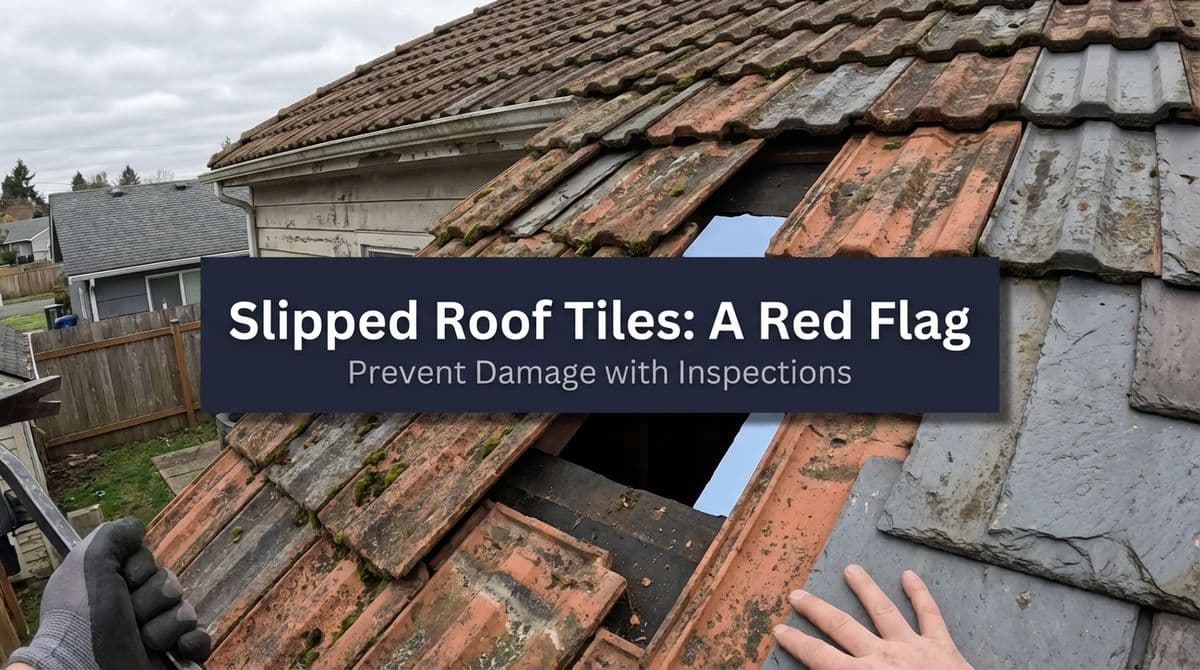
When “Just a Few Slipped Tiles” Isn’t So Minor
We recently got a call from a homeowner — let’s call her Linda — who lives in a tile-roof community where several neighbors had already used our roofing services. Linda told us she hadn’t noticed any leaks inside, but she had spotted a couple of slipped roof tiles and wanted an estimate to “just make sure everything is in good shape.”
That kind of call is exactly what we like to hear. No active leak yet, but a homeowner paying attention and asking questions before things get expensive.
On the phone, we explained to Linda what we’ll walk through with you here: slipped tiles are a red flag. They’re usually not just a cosmetic issue; they’re often the first visible sign that the weatherproofing under your tile roof is being exposed and potentially compromised.
Why Slipped Tiles Matter Even If You Don’t See a Leak
Linda’s first question was one we hear all the time: “If I don’t have a leak, how urgent is it really?”
Here’s the key point: tile is the armor, but the underlayment is the real waterproof layer. In many tile roof systems, the tiles themselves shed most of the water, but the roofing paper or underlayment underneath is what actually keeps water out of your home.
When a tile slips, breaks, or goes missing, that underlayment is suddenly exposed to sun, wind, and rain. Over time, that exposure can cause:
- UV damage that dries out and cracks the underlayment
- Accelerated aging of the roofing paper, shortening the life of the whole roof
- Water intrusion pathways where wind-driven rain can work its way underneath
By the time you see a stain on your ceiling, water has often been getting past the roof system for quite a while, slowly soaking wood, insulation, and drywall.
Common Causes of Slipped Tile on Roofs
When we come out for a tile roof inspection, we’re not just looking for the obvious “one tile out of place.” We’re trying to understand why the tile moved, so we can address the root cause. Some of the usual suspects include:
- Age and weathering: Over the years, fasteners can corrode, battens can deteriorate, and tiles can shift under repeated expansion and contraction.
- Improper installation: If tiles weren’t properly fastened or were placed out of alignment, they’re more likely to slip or rock out of place over time.
- Foot traffic: Technicians walking on the roof for satellite, solar, or HVAC work can crack or dislodge tiles if they don’t know how to walk on tile safely.
- Wind and storms: Strong winds can lift tiles that were already a little loose, especially along ridges, hips, and edges.
Each of these causes has a slightly different fix, which is why a professional eye on the whole roof system is so important.
What We Look for During a Tile Roof Inspection
When we scheduled Linda’s free estimate, we explained that we’d be doing more than just popping a few tiles back into place. A proper tile roof inspection typically includes:
- Full visual scan from the ground to spot obvious slipped, broken, or missing tiles and check overall alignment.
- On-roof inspection to carefully walk the roof (without causing more damage) and examine tiles in problem areas like valleys, around chimneys, and along ridges.
- Spot-checking underlayment under slipped or suspect tiles to see if the paper is brittle, torn, or sun-damaged.
- Flashing and penetration check around vents, skylights, pipes, and walls, where leaks often start.
- Gutter and drainage review to make sure water is being directed off the roof properly.
From there, we can tell a homeowner like Linda whether they’re looking at a simple repair (resetting a few tiles and sealing minor issues) or if there are early signs that the underlayment is nearing the end of its life in certain areas.
How Fixing Slipped Tiles Early Saves Money
Most of the time, when someone calls us as soon as they notice slipped tiles, we’re able to keep the solution pretty straightforward. Typical early interventions might include:
- Carefully resetting and refastening loose tiles
- Replacing any cracked or broken tiles
- Repairing or replacing small sections of damaged underlayment
- Re-sealing flashing details that are starting to open up
Compare that to what happens if those slipped tiles are ignored for a few seasons:
- Water slowly reaches the wood decking and framing
- Insulation gets saturated and loses effectiveness
- Mold or mildew can develop in hidden spaces
- Interior finishes (drywall, paint, flooring) are damaged
At that point, you’re no longer dealing with a simple roof repair — you’re often looking at structural repairs, mold remediation, and interior restoration on top of roof work. That’s exactly the scenario we try to help homeowners avoid.
Simple Ways Homeowners Can Spot Trouble Early
You don’t need to climb on your roof to catch early warning signs. In fact, we recommend you stay off the roof and do these simple checks instead:
- Step back from the house and slowly walk around, looking for tiles that look out of line, lower than neighbors, or missing entirely.
- Check after wind or heavy rain for new gaps, shifted tiles, or debris buildup along valleys and lower edges.
- Look inside your attic periodically for any signs of moisture, staining, or musty smells.
- Watch your ceilings for faint yellow or brown spots, especially after storms.
If anything doesn’t look right — even if you don’t see an active leak — that’s the perfect time to schedule a professional inspection.
When to Call for a Tile Roof Inspection
We told Linda what we tell most homeowners: if you notice any slipped, broken, or missing tiles, don’t wait for water to show up inside. You’ll almost always spend less by addressing it early.
It’s also a good idea to have your tile roof professionally inspected:
- After a major wind or hail event
- Every few years once the roof is past the 10–12 year mark
- Any time you buy a home with an existing tile roof
- After other contractors have been walking on the roof
Slipped tiles might look like a small detail, but they’re often your roof’s way of whispering, “Something needs attention.” Listening to that early warning — the way Linda did — is the best way to prevent leaks, protect your home, and avoid costly damage down the road.