One Broken Tile Is Never Just One Problem
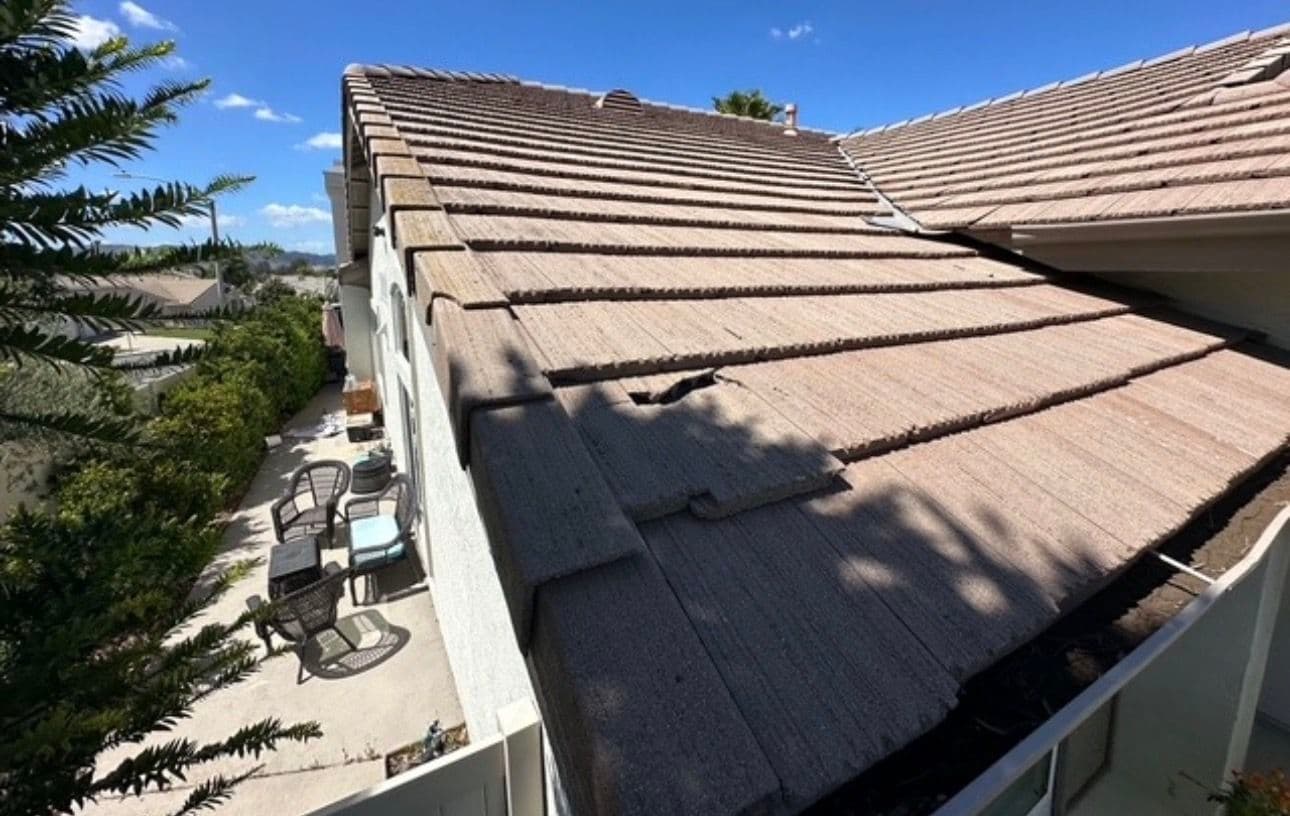
Most homeowners notice one bad tile and stop there. That's actually the wrong move. When we get on a roof and find a cracked or missing tile, that's our cue to keep looking - because there's almost always more going on underneath and around it.
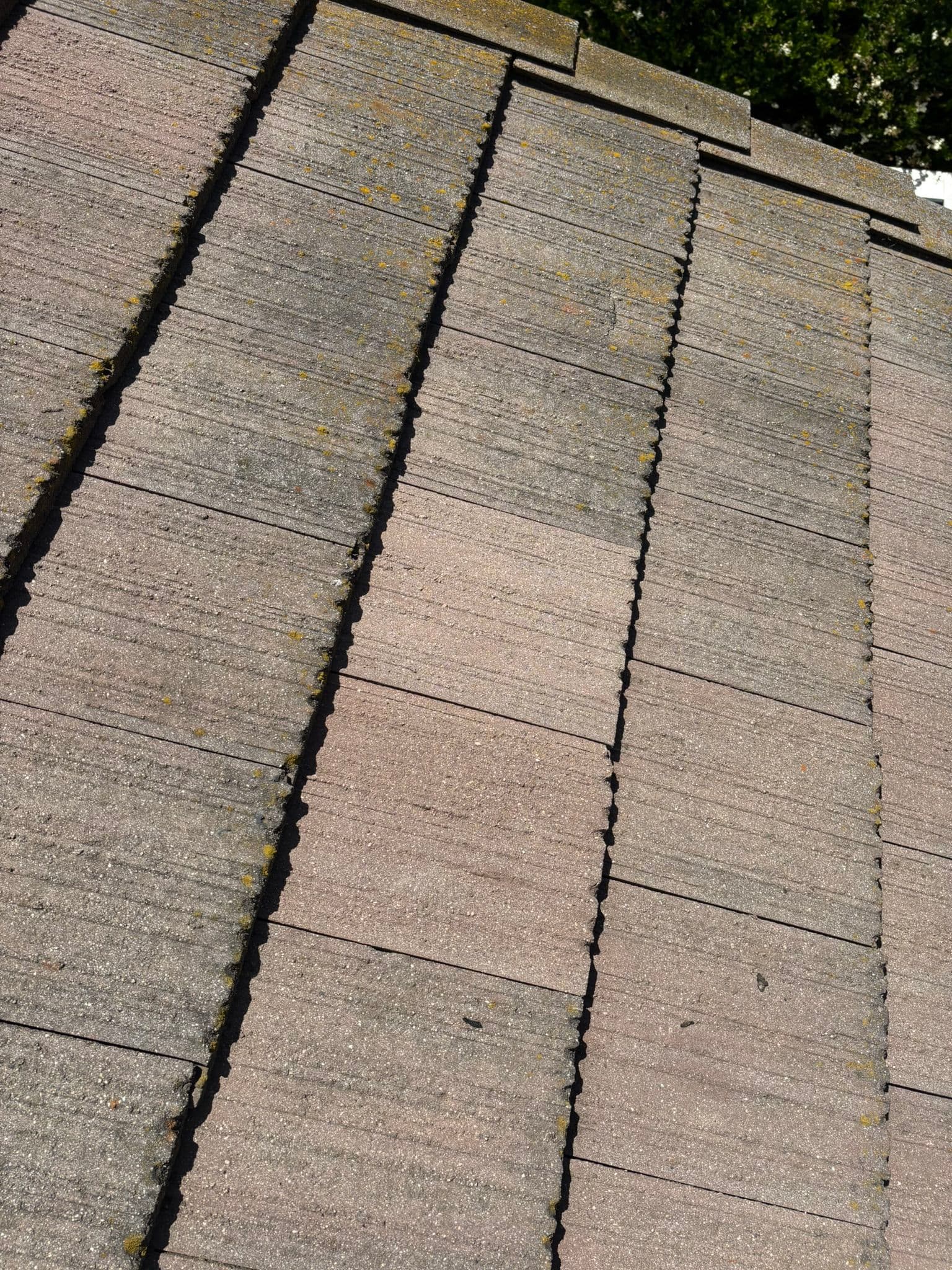
What we're dealing with here is a concrete tile roof showing the kind of wear that builds up over time. Cracked tiles, shifted pieces, gaps in the field where water can work its way in. None of it happens overnight, and none of it fixes itself. Left alone, what starts as a small tile issue turns into a roof leak repair job - or worse, interior water damage that costs a lot more to sort out.
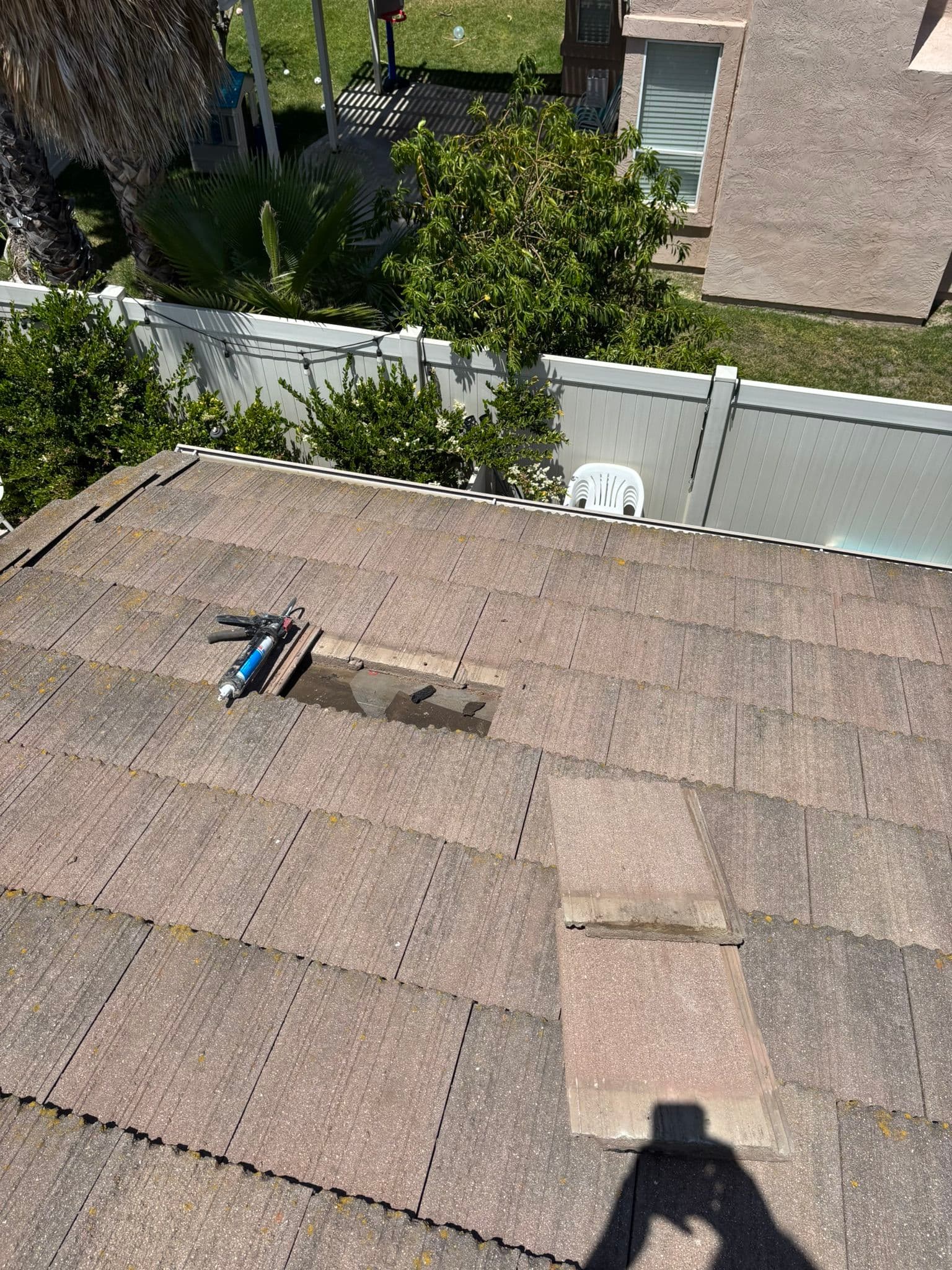
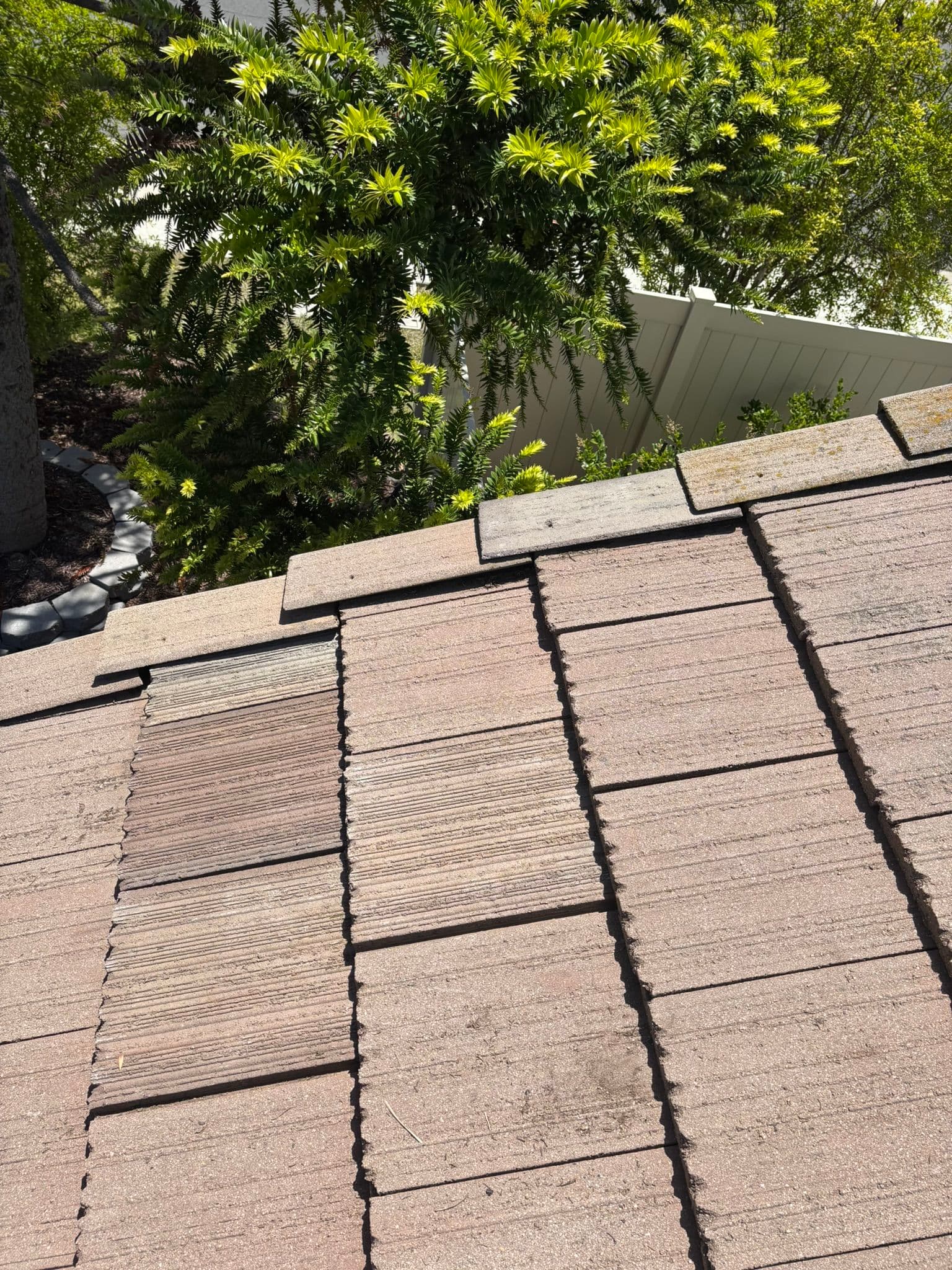
Here's how we approach it. We pull the damaged tiles, check what's underneath, and assess the surrounding area before anything goes back into place. If neighboring tiles are loose or compromised, we deal with those too. Then we replace, seal, and reset everything so the roof is actually doing its job again - not just looking patched.
That caulk gun you see on the roof isn't the whole story, but it's part of it. Proper sealing matters. So does making sure each tile sits correctly so water sheds the way it's supposed to. With tile roofing, the details really do determine how long a repair holds up.
If your tile roof has seen better days - or you just noticed something that doesn't look right - it's worth getting eyes on it before the next rain shows up. Catching it early is almost always the cheaper, easier path.