Tile Roof Leak Repair with Upgraded Underlayment in Lake Elsinore
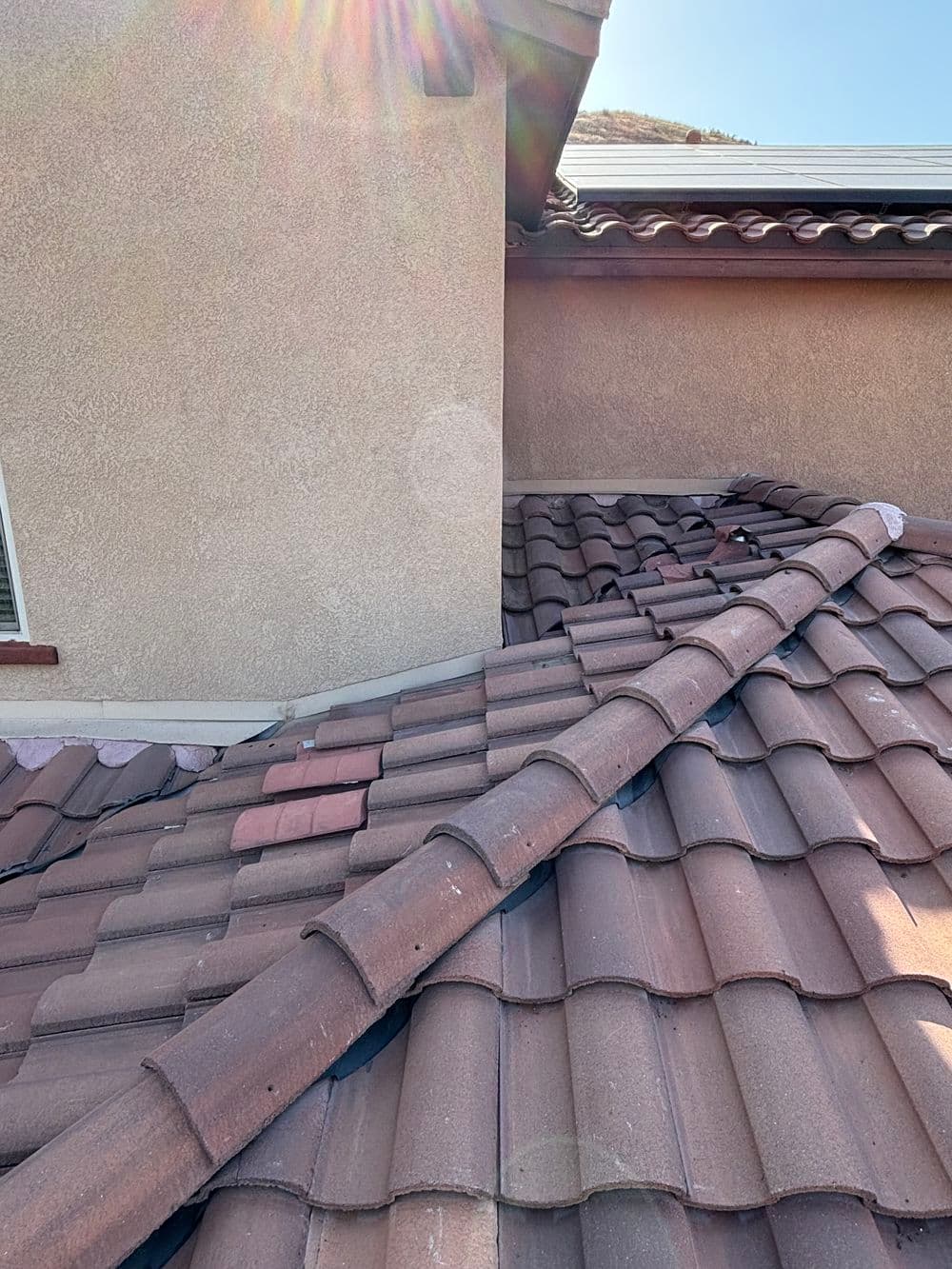
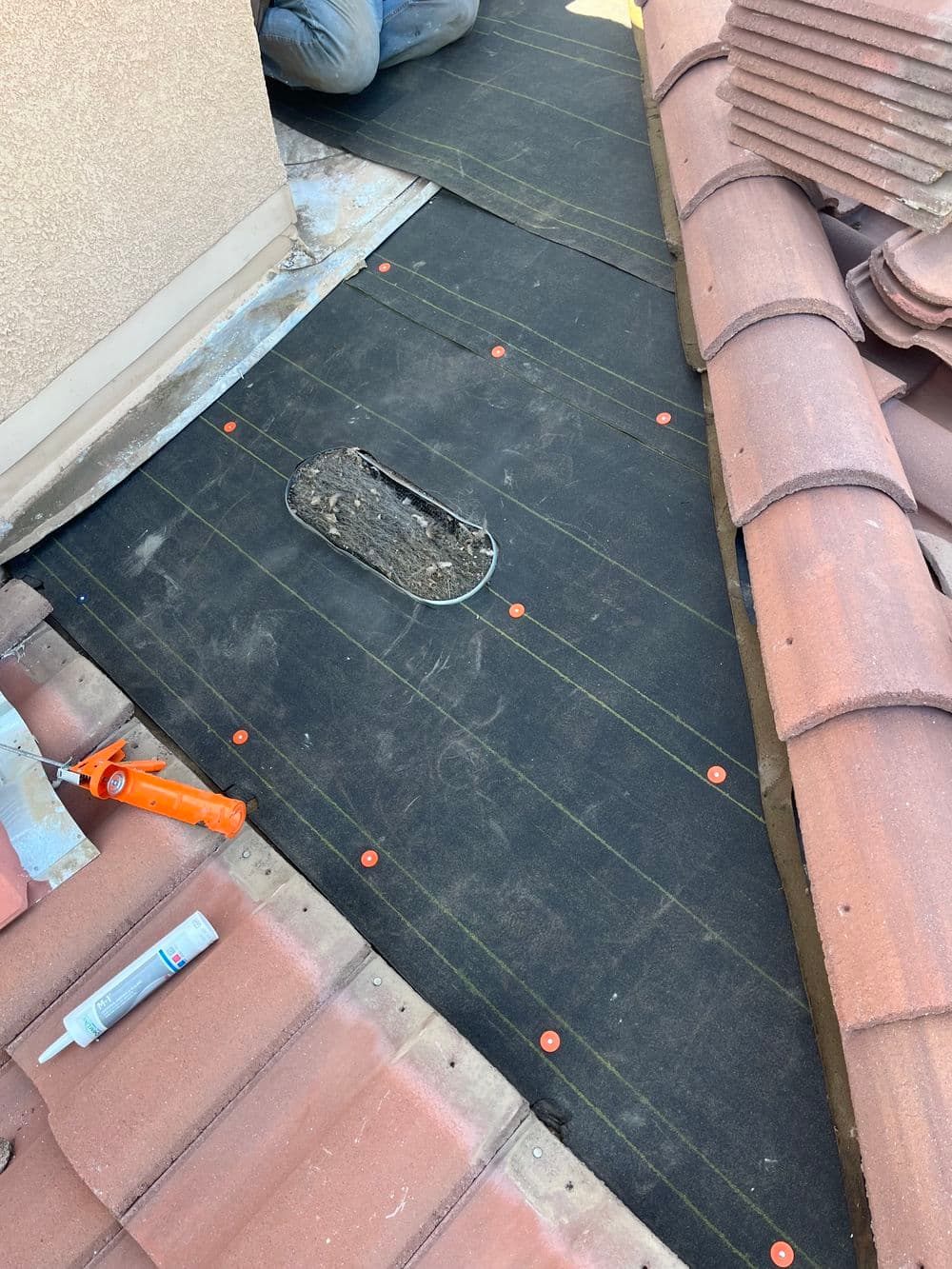
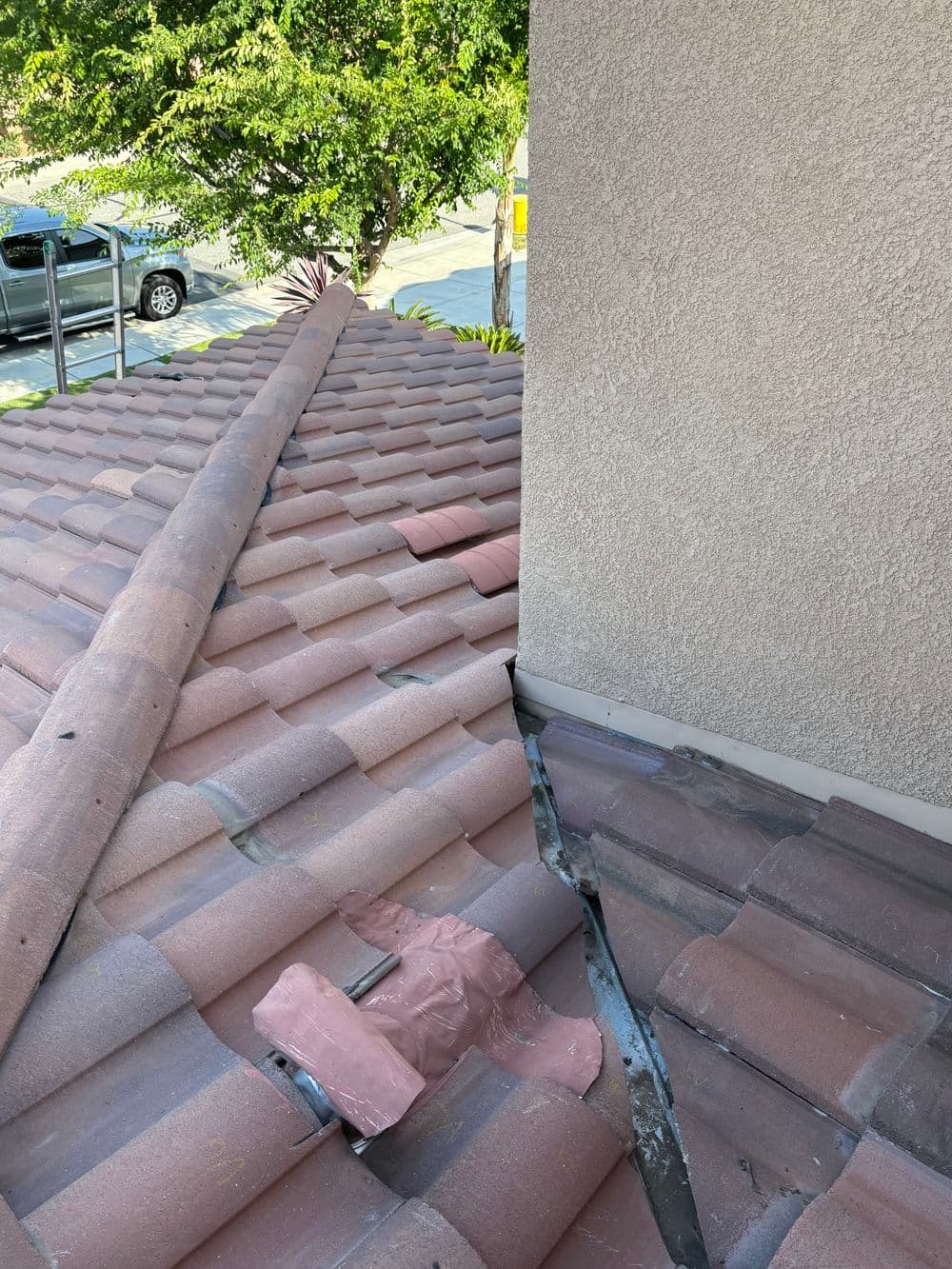
This one had a few things working against it. The underlayment beneath the tiles had deteriorated, and debris had built up at the flashing - blocking water flow and sending it right into the home instead of away from it. That combination is a common cause of leaks on tile roofs, and it's exactly the kind of thing that gets worse the longer it sits.
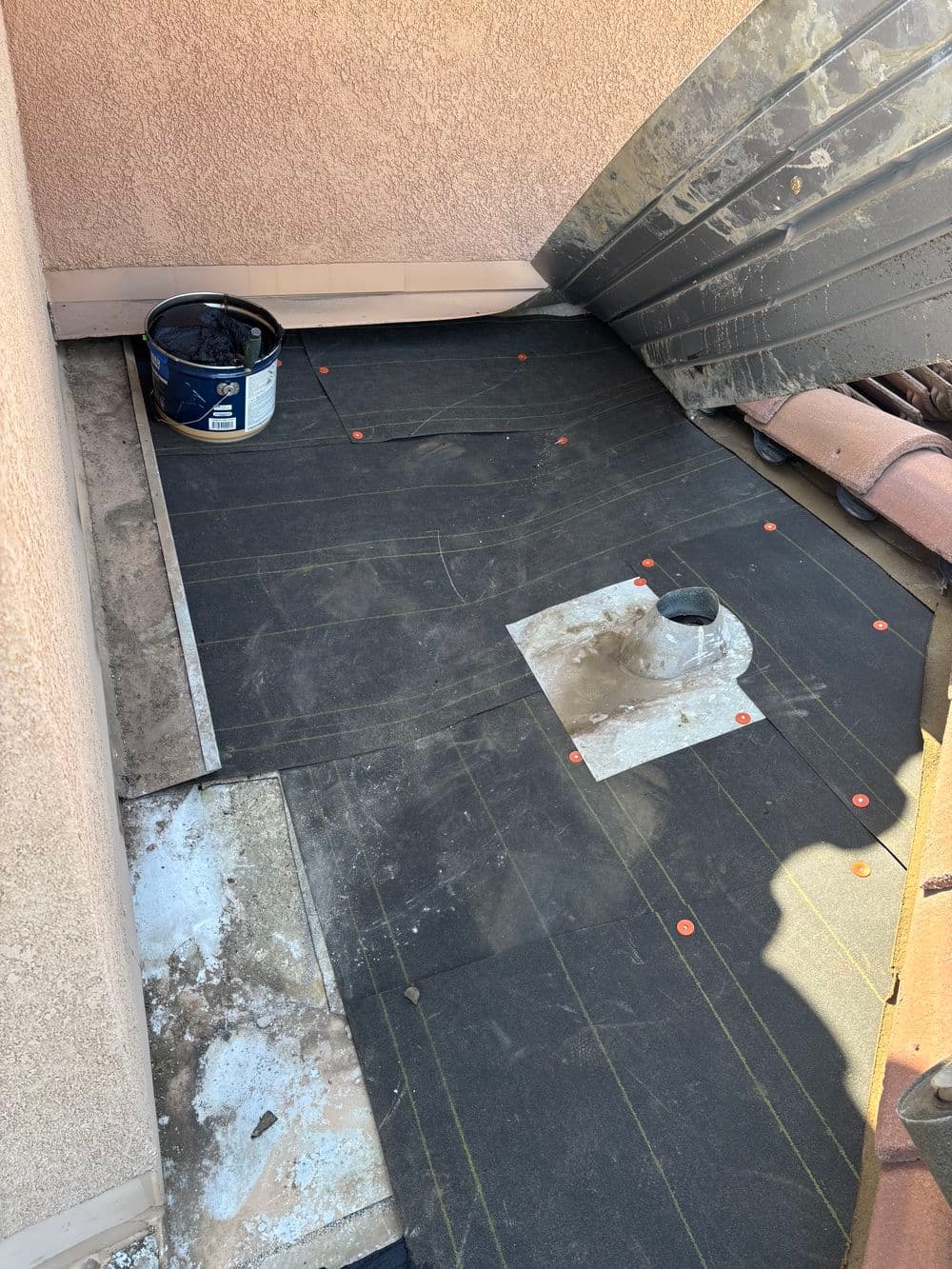
We pulled every tile from the affected area so we could get a clear look at what was underneath. The flashing got a full cleanout and was repaired where needed. No shortcuts there - if the flashing isn't right, nothing else matters.
Once the flashing was solid, we laid down 40-pound underlayment as an upgrade over the original 30-pound that came with the roof. The difference matters. Heavier underlayment holds up longer and gives the tiles a better base to sit on. It's a straightforward upgrade that adds real protection.
With the new underlayment down, we reinstalled all the tiles and checked every single one before putting it back in place. Any cracked or shifted tiles in the leak area got flagged and addressed. The goal was to put everything back better than we found it - not just patch and move on.
Homes in Lake Elsinore deal with heat, wind, and occasional heavy rain. That kind of climate is tough on aging underlayment and flashing. Catching this stuff early - before it turns into ceiling damage or mold - is always the better path.