Tile Roof Valley Repair Done the Right Way
Roof valleys are one of the most overlooked parts of a tile roof - and one of the most vulnerable. Two roof planes coming together means all that rainwater funnels directly through that one channel. When the valley metal is old, corroded, or improperly installed, leaks aren't a matter of if. They're a matter of when.
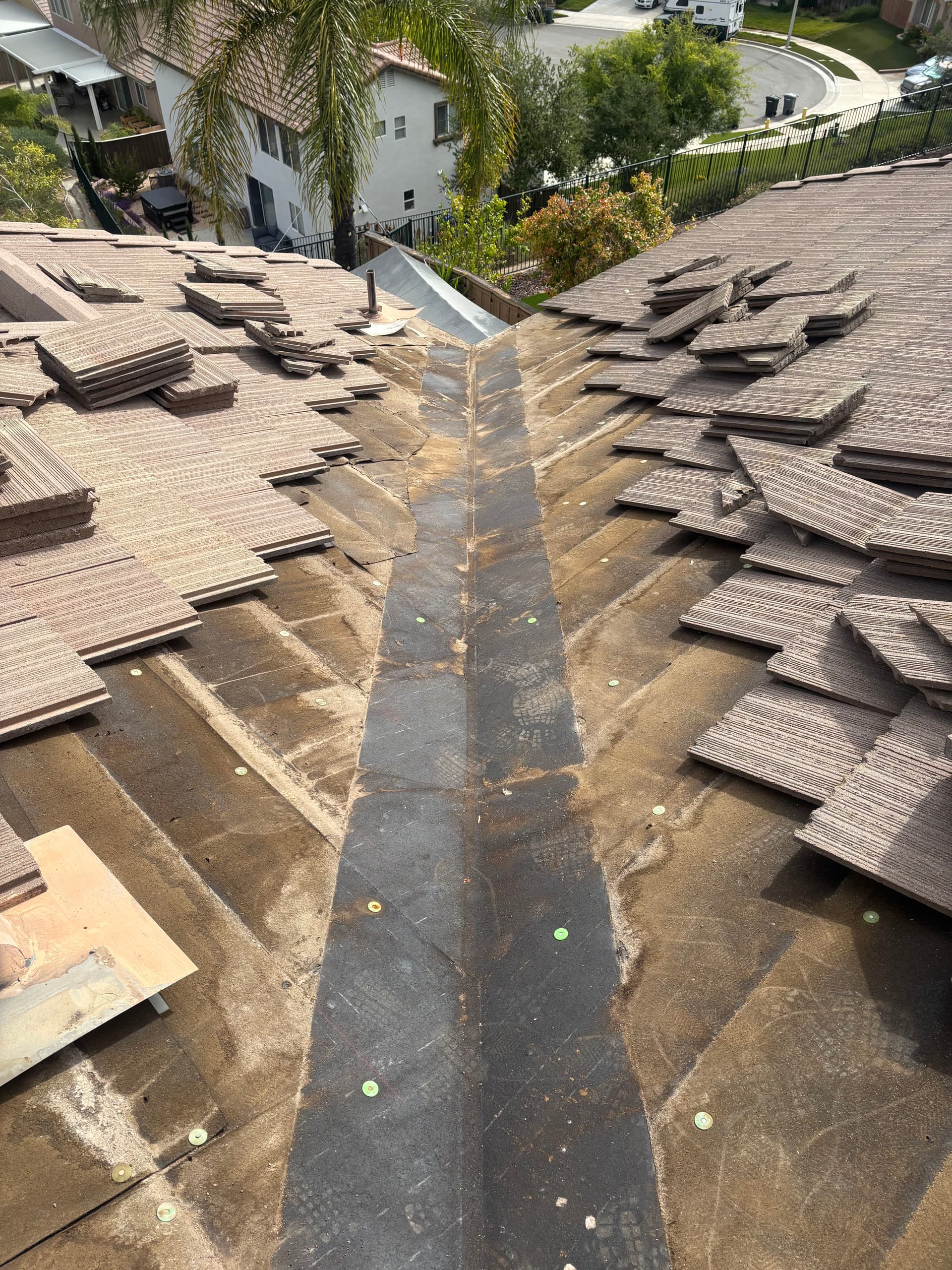
Here's what we were working with: a crowded valley where the tile was too close to the center, the underlayment had seen better days, and the old valley metal just wasn't doing its job anymore. Left alone, that's a direct path for water to get under the tile and into the structure of the home.
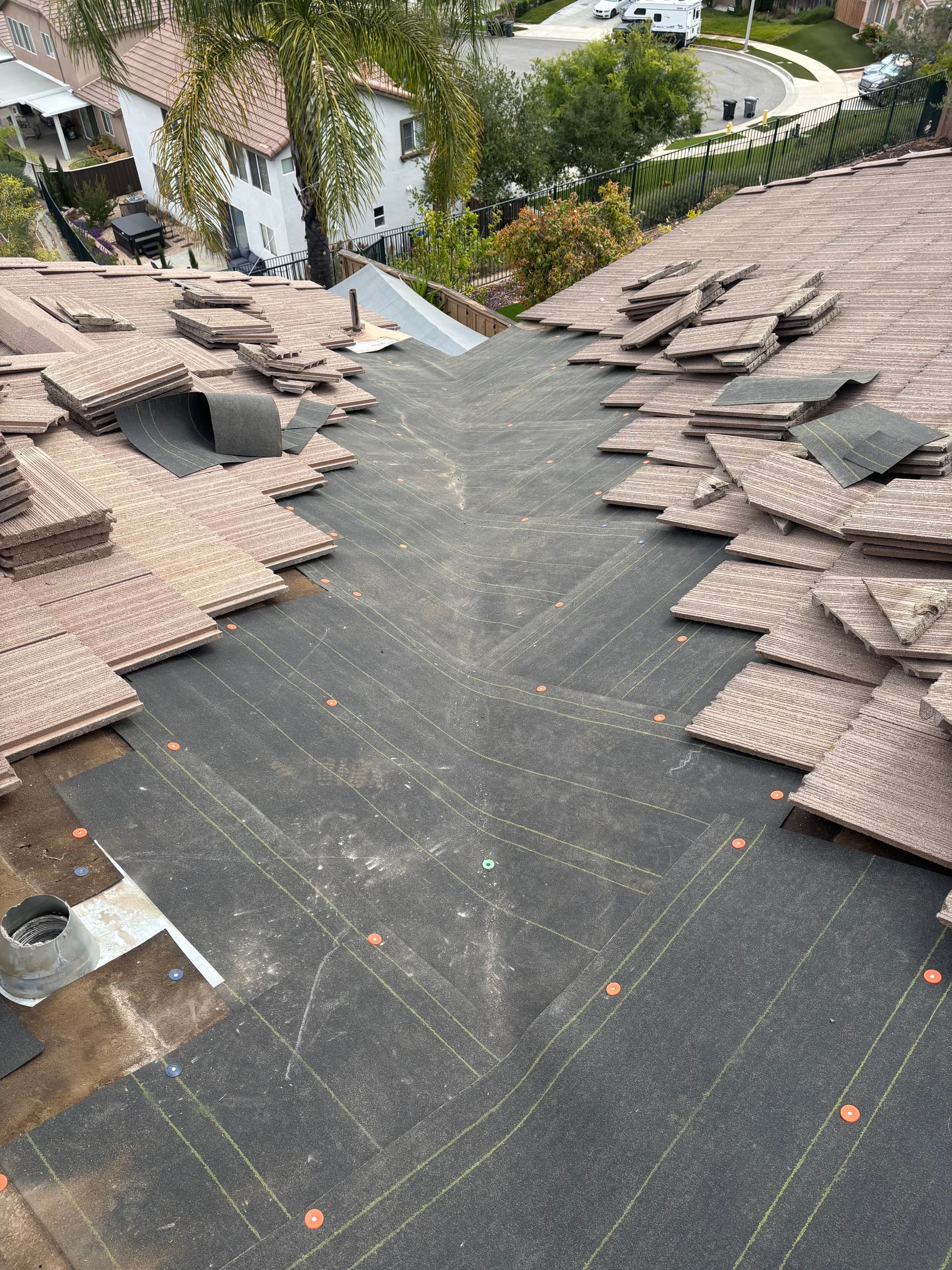
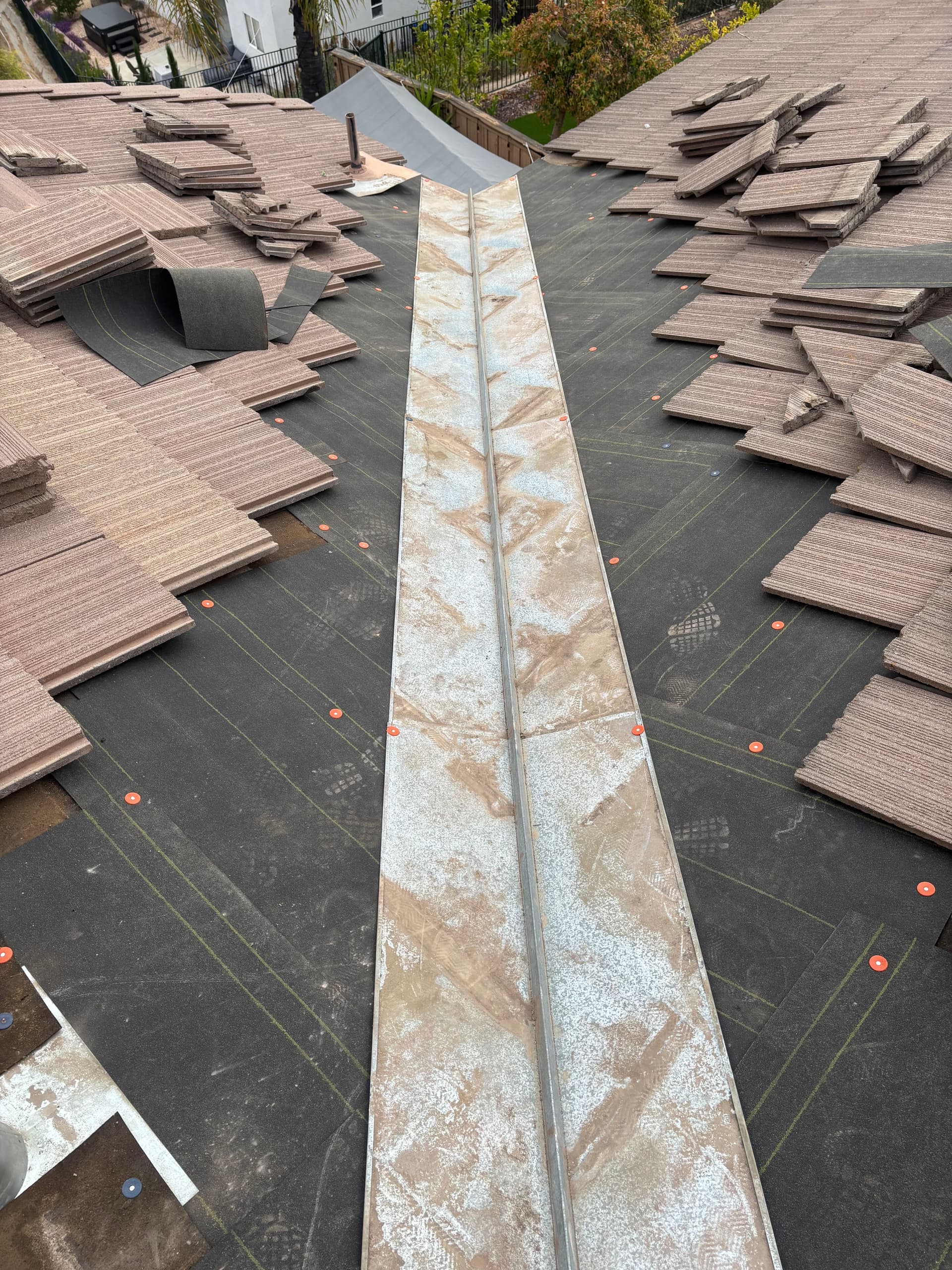
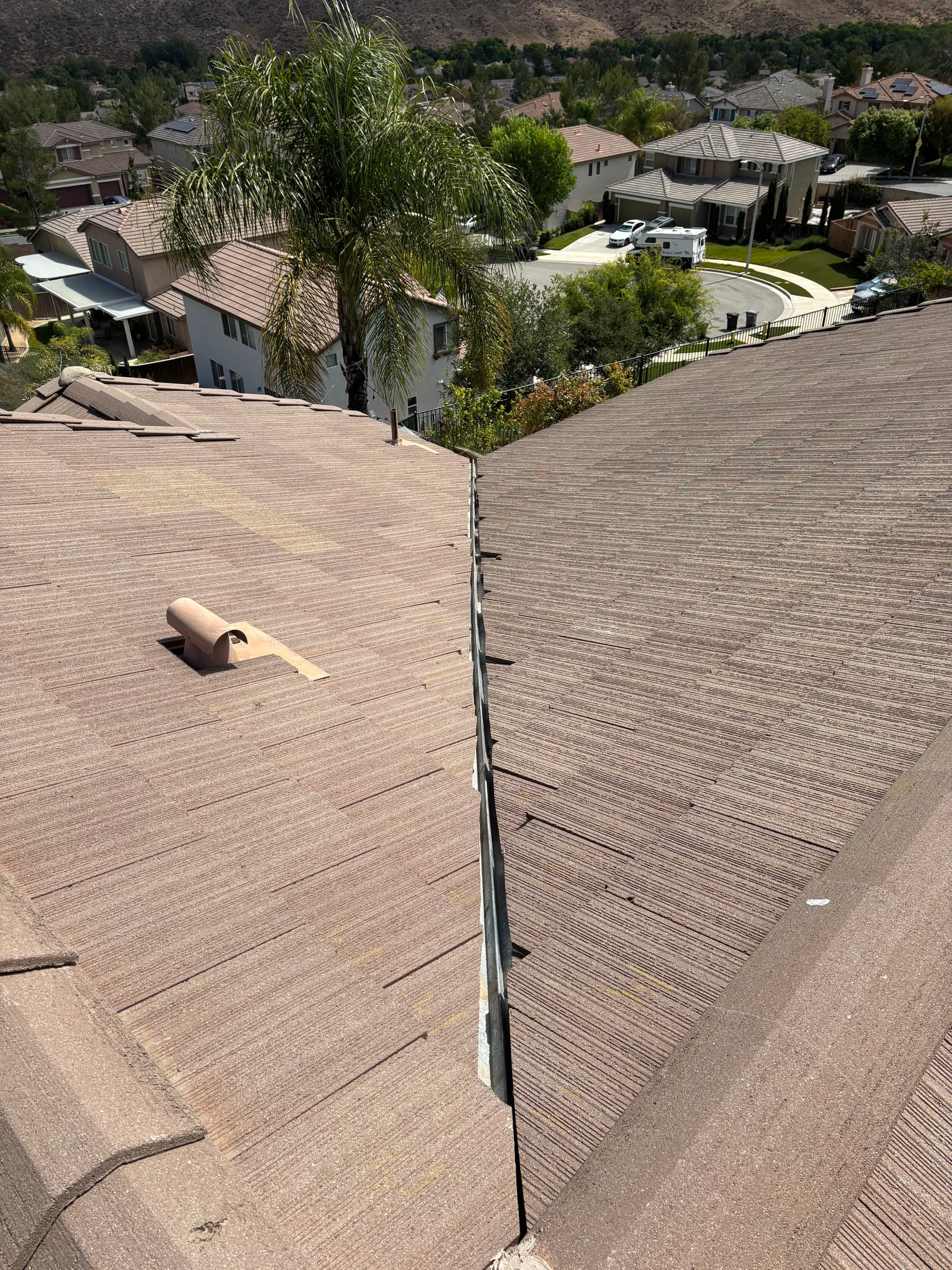
So we did it right. We pulled the tile back carefully on both sides, stripped out the damaged underlayment, and installed fresh underlayment before fitting new valley metal down the center. Fresh underlayment, properly lapped and fastened - you can see the new rubber-capped fasteners locked in at consistent spacing across the field. Then the tile goes back down with the right clearance on each side so water has a clear lane to move through.
That's really the whole point of a valley repair done correctly. Water needs somewhere to go. When tile crowds the center or the metal underneath is compromised, water stacks up and finds the path of least resistance - usually into your ceiling. The fix isn't complicated, but it has to be done in the right sequence with the right materials.
Whether your tile roof is showing signs of a slow leak or you just want to get ahead of it before the next big rain, this kind of repair is exactly what protects your home long-term. Tile roofing is built to last decades - the valley system underneath it has to match that standard.